Why cladding scaffolding is different
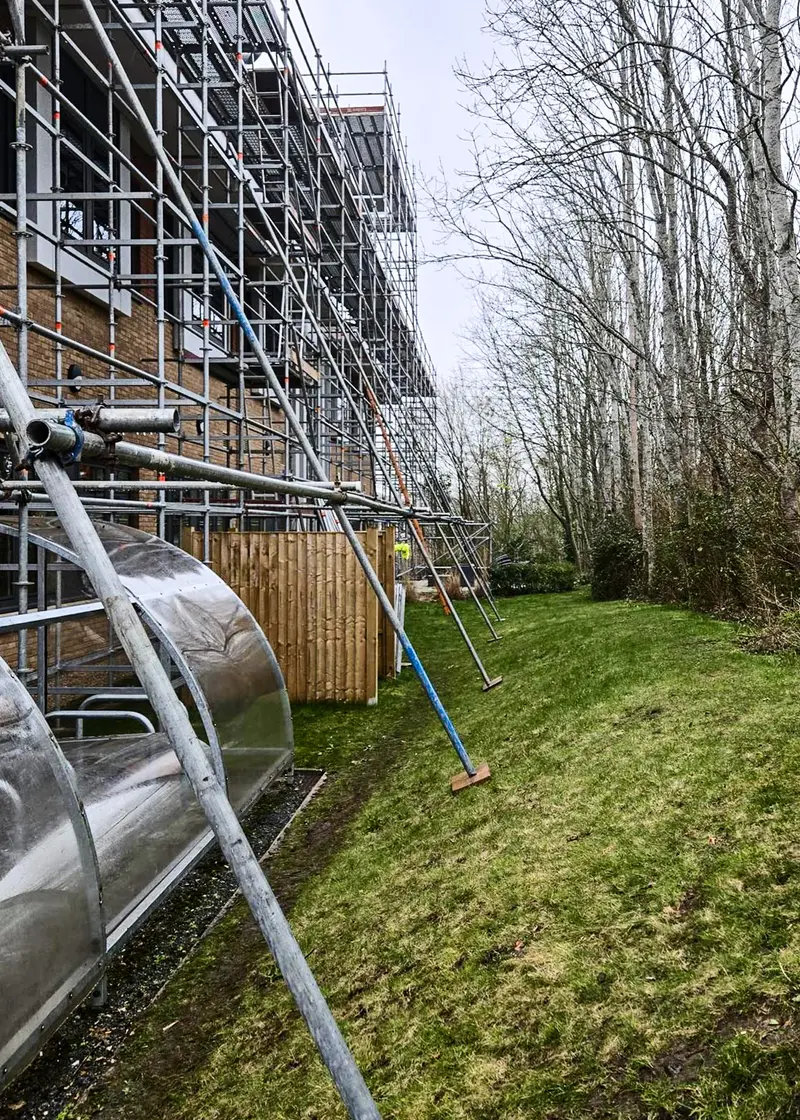
The cladding trade has specific needs that a generic brickwork scaffold doesn’t meet. Cladding panels are large, often over 2m in height, and they’re delivered in stacks that need forklift access to the loading bay. Panel installation needs a working platform that’s wide enough to hold the panel flat while the fixings go in — wider than a brickwork deck. And the cladding grid is a visual feature of the finished façade, so the scaffold has to avoid leaving tie scars that show through once the cladding is hung.
We’ve developed a standard cladding scaffold spec over the last few years that addresses all of this — and we’ll adjust it for the specific cladding system on any given job. Rainscreen cassette systems, insulation-first systems, curtain wall and window wall packages, and composite cladding panels all have slightly different scaffold needs.
Working with the fire strategy
Post-Grenfell, every cladding refurbishment project has a fire strategy — and the scaffold has to be compatible with it. Common constraints include fire-retardant sheeting specifications, limits on how much of the façade can be stripped at any one time, and requirements on the sheeting joint detail to prevent fire spread between levels. We’ll work to the fire engineer’s requirements from the start, not retrofit for them.
Talk to us at design stage
The scaffold is a significant line on the cladding refurbishment budget. It’s worth bringing us in at design stage so we can flag the scaffold implications of the cladding designer’s choices — bay positions, tie grid, programme sequence. Small changes to the cladding design can produce big changes to the scaffold cost.
If you’ve got an upcoming cladding refurbishment or insulation upgrade project in the Milton Keynes region, get in touch and we’ll produce a scaffold quote against your cladding spec.