What confined space scaffolding actually involves
Confined space work is regulated tightly — and rightly so. The Confined Spaces Regulations 1997 are clear about the duty of care, and any scaffold inside a confined space forms part of the broader safe system of work your team is operating under. Our job is to deliver a scaffold that supports your permit-to-work, not complicates it.
In practice that means an internal access structure that:
- Allows your operatives to reach every working face safely
- Doesn’t obstruct the agreed escape route
- Lets rescue teams reach a casualty quickly if the worst happens
- Can be erected and stripped in sequence without compromising atmosphere monitoring or ventilation
We coordinate with your confined space supervisor or principal contractor from day one so the scaffold programme fits the permit regime, not the other way around.
How we design it
Every confined space scaffold is designed for the specific job. We look at:
- The geometry of the space — round vessels behave differently to square chambers
- The working points your trades need to reach and the loading they’ll place on the deck
- The size of the access hole (a 600mm manway changes everything)
- Atmosphere monitoring and ventilation equipment that needs to stay clear
- Existing permanent steelwork, nozzles and pipework we have to work around
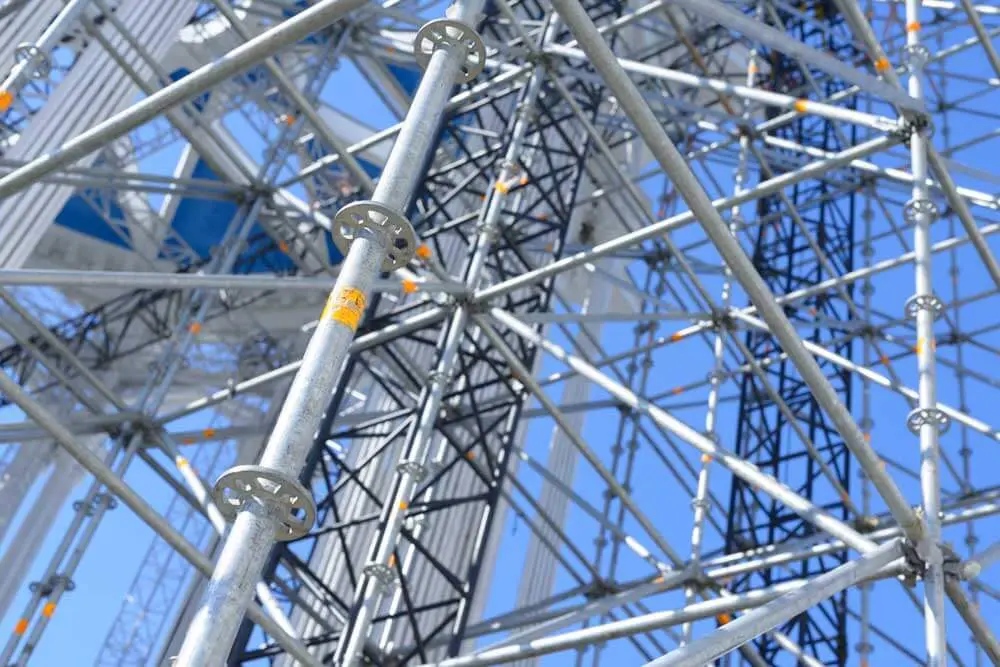
Where weight and manual handling are the constraint, we’ll often specify Layher system components for the deck and main uprights, with tube-and-fitting used for the irregular trimming around fixed plant. That combination tends to produce the fastest, lightest scaffold in a tight environment.
Safety, training, and paperwork
All our confined space work is carried out by CISRS-qualified scaffolders with confined space training appropriate to the risk level (low, medium or high risk, depending on the space). Senior scaffolders on complex jobs hold the CISRS Advanced Scaffolder card.
As an NASC member we follow TG20 and SG4 guidance on access and falls from height, and our CHAS, CITB and SafeContractor accreditations mean we’re pre-qualified on the major industrial supply chains. Every confined space scaffold we build comes with a design drawing, a handover certificate, and regular inspection records for the duration of the hire.
Talk to us early
The earlier you bring us in, the better the result. Confined space scaffolding that’s designed alongside the permit plan is always safer, quicker to erect, and easier for your operatives to work from than one that’s been squeezed in afterwards. If you’ve got an upcoming tank clean, shaft repair, vessel inspection or internal maintenance job anywhere in the Milton Keynes region, get in touch — we’ll happily talk through the access options before you commit to a programme.