Domestic scaffolding done properly
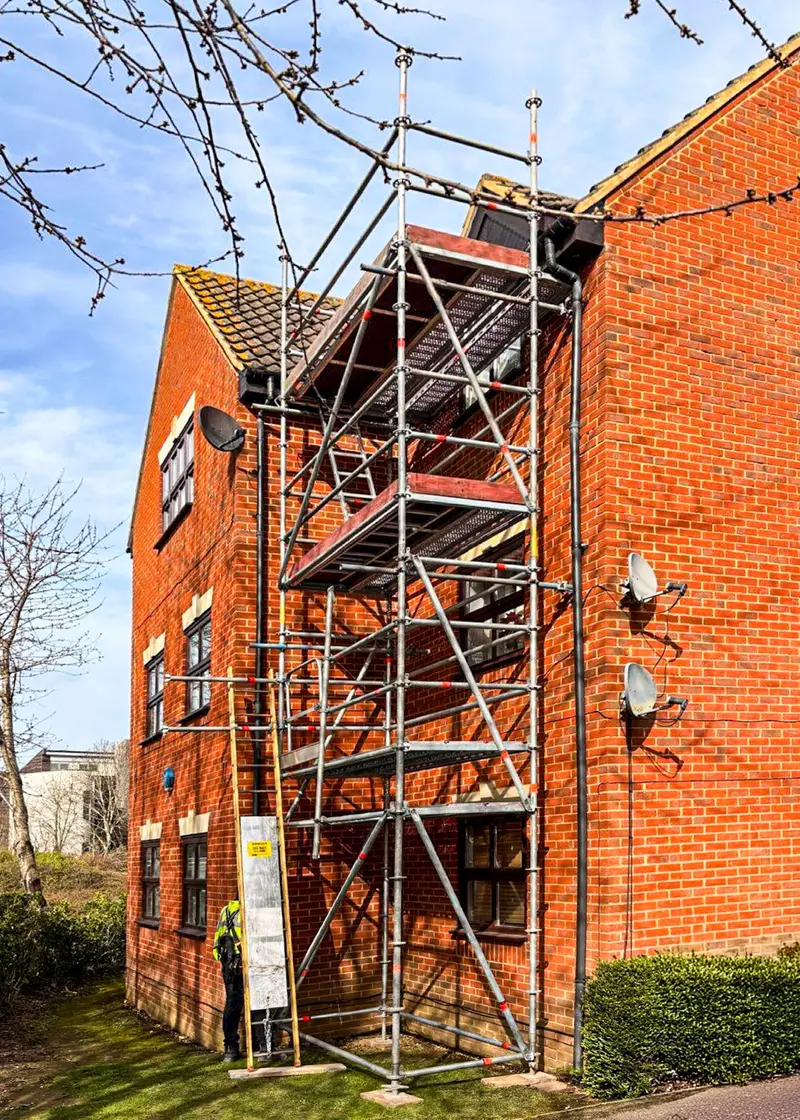
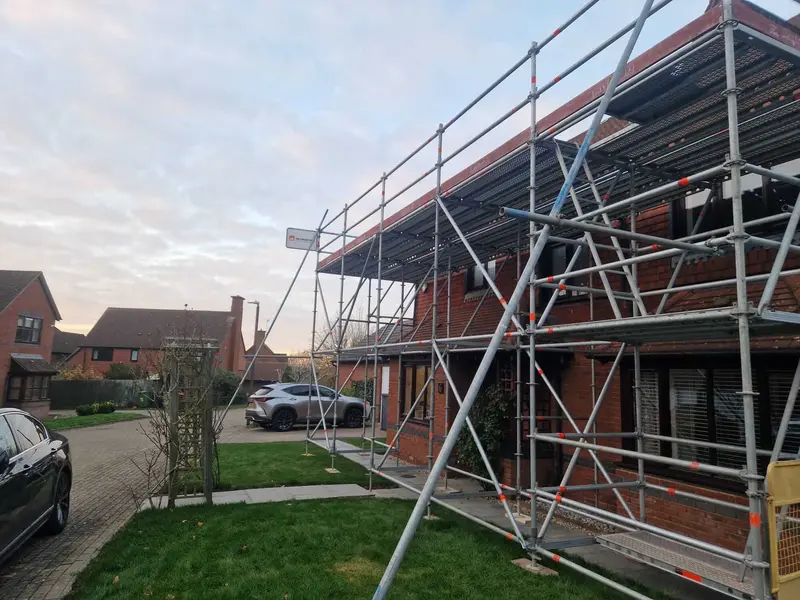
Domestic scaffolding has a reputation — not always deserved — for being rougher than commercial work. Smaller firms with smaller margins cutting corners, scaffolds that don’t quite meet standard, scaffolders who disappear once the job is up. We don’t work that way, and the result is that most of our domestic work is repeat business with small developers and builders who value the consistency.
Every domestic scaffold we install is designed to TG20 compliant standards or better, with engineered design where the geometry requires it. The scaffolders on domestic jobs are CISRS-carded, the supervision is proper, and we’re on the phone if anything comes up during the build. That costs a little more than the cheapest scaffold on the market, and is worth it on any build where the scaffold will be up for months.
Sequencing the trades
The scaffold is a tool for the trades. The bricklayer, the renderer, the roofer, the solar installer, and the chimney sweep all need something slightly different from it. We’ll plan the alteration sequence around the trade programme — raise for first-floor brickwork, raise for roof truss delivery, reconfigure for roofer, reconfigure for render, strip in phases as the finishes complete. That plan goes into the quote so you can see what’s priced in and what isn’t.
Honest pricing for self-builders
Self-builders usually aren’t scaffold specialists, and the risk of getting stung on a scaffold quote is real. We quote on a transparent basis — erection, alteration schedule, strip, hire period, all priced separately so you can see what you’re paying for. If the build runs longer than planned, the hire extension is at an agreed rate. If you need a bay added mid-programme, the variation is priced on the same basis as the main quote.
Get in touch at the planning or early build stage and we’ll walk your plot, talk through the programme, and produce a quote against the drawings.