Specialist Scaffolding

Public Access Scaffolds

Public access scaffolds — covered walkways, gantries, and scaffolds that keep shops open and footpaths walking while work happens overhead.

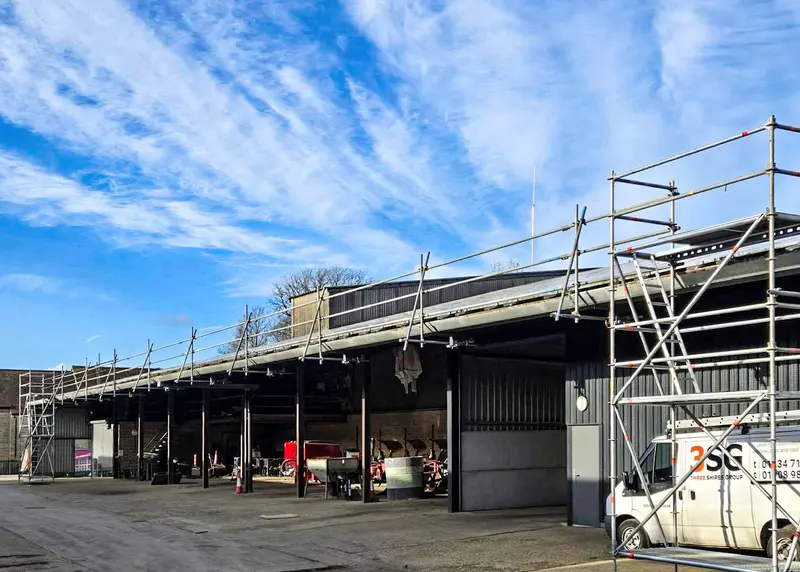
Pedestrian gantry running along the front of a busy high-street retail unit in Milton Keynes with scaffolding above for façade refurbishment and a covered walkway protecting shoppers

Public Access Scaffold

Lit covered walkway through a scaffold on a town-centre site with signed diversions and clear pedestrian flow maintained throughout the working day

Covered Walkway

NASC Member CISRS Qualified CHAS Accredited SafeContractor Approved CITB Registered Free Site Surveys

Skilled & Certified Scaffolders

Public access scaffolds are designed for situations where the scaffold stands between working trades and the general public. Retail façade refurbishments where the shop stays open, residential blocks where residents still need front-door access, pedestrian gantries where a footpath stays open, and covered walkways through construction sites. The engineering is more demanding because the public cannot be excluded from the zone, and the detailing is more careful because the scaffold's user experience matters.

We design and install public access scaffolds across Milton Keynes and the surrounding region for main contractors, retail developers, residential block refurbishers, and facilities teams. Every public access scaffold is designed with the user in mind — clear headroom, adequate lighting, good signage, step-free access where possible, and protection from falling material designed to proper impact-load specifications. Public safety is the headline, but public comfort is the quiet second priority.

What we handle:

  • Pedestrian gantries with clear headroom
  • Covered walkways with lighting and signage
  • Impact-rated debris protection
  • DDA-compatible access where required
  • Retail frontage access during trading
  • Local authority licence support

When you need it

Typical scenarios where public access scaffolds is the right call.

Retail frontage refurbishment

Scaffolds designed to let shops continue trading during façade refurbishment — retained glazing access, clear signage, and managed public flow.

Covered pedestrian walkways

Full-length covered walkways through construction sites where the footpath can't be diverted — lit, signed, and maintained through the project.

Occupied residential refurbishment

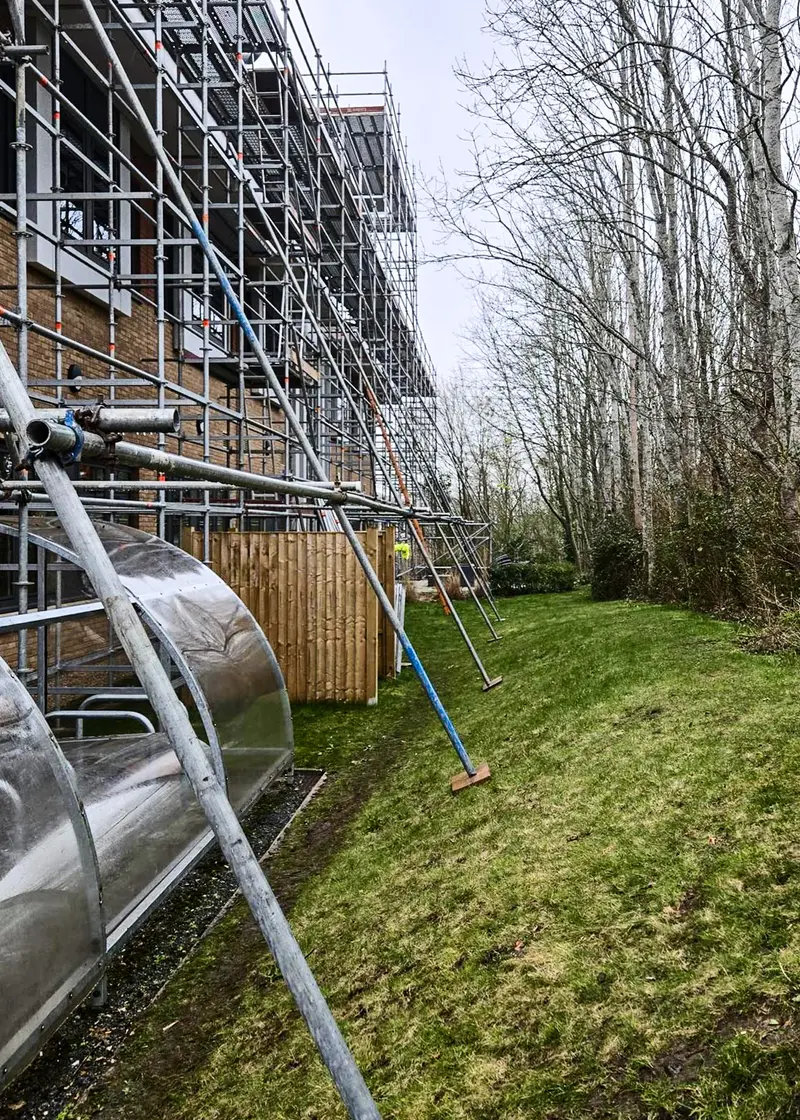
Scaffolds on blocks where residents remain in occupation — front door access, balcony retention, and thoughtful routing around daily life.

The user comes first

A public access scaffold is fundamentally a piece of temporary infrastructure that the public has to use. That reframes the design priorities. The primary question isn’t “how do we build the scaffold?” — it’s “how do we build the scaffold so that the public can use it safely, comfortably, and without disruption?” Everything else follows from that.

In practice, that means wider walkways than technically necessary, better lighting than technically necessary, clearer signage than technically necessary, and maintenance standards higher than technically necessary. The public don’t care that the scaffold is temporary. They’re using it today, and their experience today is what drives whether the scaffold has succeeded or failed.

Engineering for impact loads

The load case on a public access scaffold is different to a normal scaffold. We’re not just designing for working loads above; we’re designing for the impact of falling material onto the roof of the walkway. That calculation runs through the worst-case dropped object on the job — often a piece of cladding, a tool, or a piece of plant — and sizes the roof to absorb the impact without failure. The calculation comes before the scaffold spec is fixed.

Working with retailers

Retail frontage refurbishment is one of the trickier scenarios. The retailer needs to stay open, the public needs to keep flowing, and the contractor needs to do the work. Getting that triangle right requires survey conversations with the retailer before the scaffold is designed — understanding their delivery routes, their customer flow, their display priorities. We’ll sit down with the shop manager at pre-start and walk through the install plan so they can brief their staff accordingly.

Talk to us at planning

Public access scaffolds are cheapest and easiest when designed in at planning, not retrofitted mid-programme. If you’ve got an upcoming town-centre, retail or occupied-building project in the Milton Keynes region, get in touch at design stage and we’ll work with your architect and main contractor on the public-facing scaffold strategy.

Our Process

How It Works

Getting scaffolding in place shouldn't be complicated. Here's how our straightforward process works from first contact to completion.

01

Free Quote

Contact us by phone or via our online form. We'll discuss your project requirements and arrange a convenient time to visit.

02

Site Survey

One of our experienced estimators will visit your site, assess the access requirements, and provide a detailed, competitive quote.

03

Scaffold Erected

Our CISRS-qualified scaffolders will erect your scaffold safely and efficiently, with full compliance to NASC standards.

04

Sign-off & Removal

Once your project is complete, we'll carry out a full inspection, obtain sign-off, and dismantle the scaffold promptly.

Need public access scaffolds in Milton Keynes?

Speak to our team for a free site visit and a clear, no-obligation quote.

Gold Standard Safety

We're proud NASC members

The NASC badge isn't self-certified — it's independently audited. As one of only a handful of NASC-certified scaffolding companies in the Milton Keynes area, it's a standard we work to every single day.

What NASC membership means for you

Frequently Asked Questions

How do you keep shops open during scaffolding?
Careful design. The scaffold standards are positioned away from shopfront entrances, the fascia area is left accessible for shop signage, and where a run of standards falls across a shop frontage we'll route them through the window cill line so the retail display stays visible. We'll coordinate with the retailer at survey stage to understand their trading priorities.
What about pedestrian gantries and licensing?
Gantries on the public highway require a pavement licence from the local authority. We handle the application process — drawings, insurance, method statements — but lead times vary between councils. Typically 4-8 weeks from application to issue, so flag the gantry requirement to us early in the project.
How do you handle debris and falling objects?
Impact-rated debris protection is the core specification. The covered walkway roof is designed to BS EN 12810 impact loading for the expected drop heights, with a fan scaffold and debris netting above where work is happening at height. We calculate the impact loading from the worst-case dropped object on the job and size the roof accordingly.
Is lighting and signage included?
Yes — as standard on public access scaffolds. Emergency and working lighting under the walkway, directional signage at entry and exit, wayfinding to reinstate pedestrian routes through or around the site, and retail messaging where requested by the shopkeeper. All specified and installed; we coordinate the electrical connection with the main contractor.
Can the walkway be DDA-compatible?
Yes — that's standard on any scaffold that replaces a public pedestrian route. Clear widths of at least 1.2m, step-free surface, tactile paving at transitions, and adequate headroom for wheelchair users and pushchairs. We'll design to the local authority's accessibility standards and include the spec in the licence application.
Do you maintain the walkway through the project?
Yes. Public access scaffolds need regular maintenance — lighting checks, panel replacement, signage refresh, cleanliness. On longer-duration projects we include a scheduled maintenance visit cycle; on shorter jobs we'll attend reactively. The walkway has to stay in presentable condition throughout the life of the scaffold.

Get in touch for a quote

NASC certified · CISRS qualified · Fully insured · 25+ years experience across Milton Keynes and the surrounding area.