Commercial Scaffolding

Demolition Scaffolding

Scaffolding for controlled demolition — crash decks, perimeter protection and façade retention sets — engineered for the sequence and stripped to match the demolition.

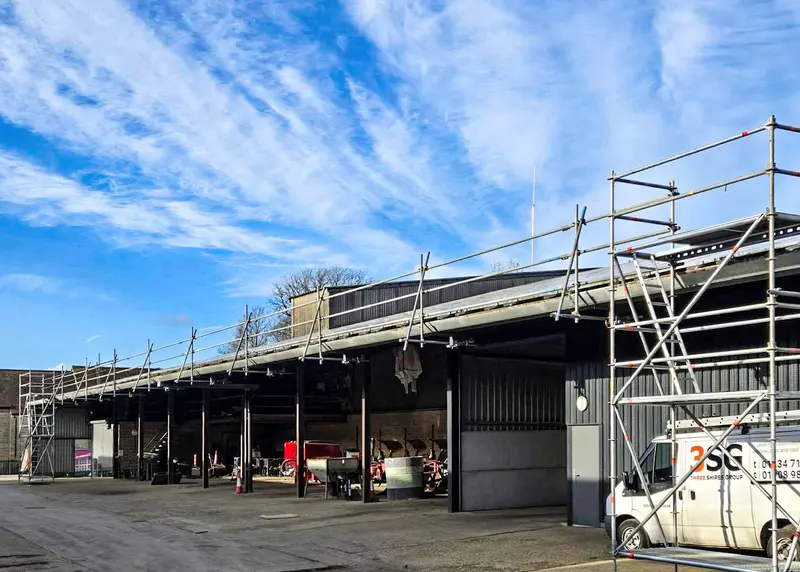
Full-perimeter sheeted demolition scaffold around a three-storey commercial building in Milton Keynes, with a crash deck at the first floor level and public protection gantry on the street frontage

Demolition Scaffold

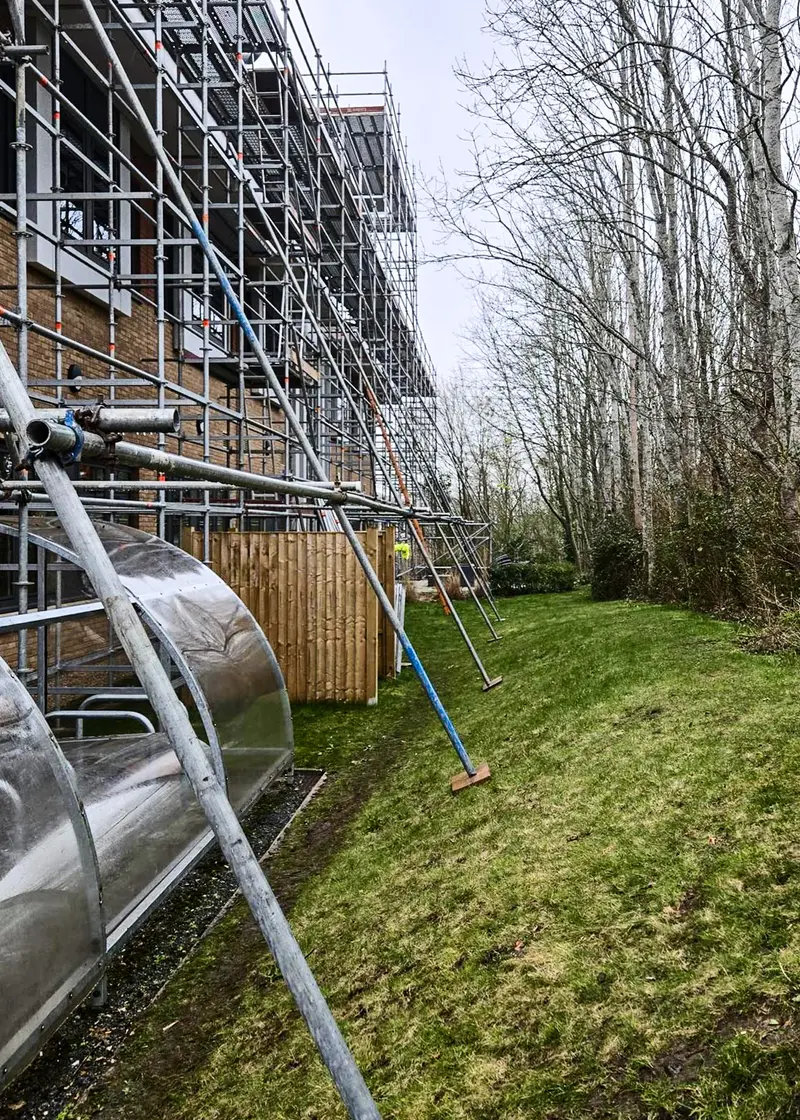
Engineered crash deck built over a ground floor retail unit, supporting the upper-floor hand demolition works while keeping the ground floor in use

Crash Deck

NASC Member CISRS Qualified CHAS Accredited SafeContractor Approved CITB Registered Free Site Surveys

Skilled & Certified Scaffolders

Demolition scaffolding sits in its own category. The loading regime is different, the sequence is different, and the scaffold gets progressively stripped as the demolition progresses rather than staying intact from start to finish. We design and install demolition scaffolding across Milton Keynes and the surrounding counties for demolition contractors, refurbishment teams doing soft-strip, and structural engineers running façade retention schemes.

Our scaffolding supports a range of demolition work — full hand-demolition, soft-strip prior to mechanical demolition, controlled take-down of sensitive structures next to public areas, crash decks protecting lower floors during upper-floor demolition, and façade retention sets holding heritage frontages while the structure behind is rebuilt. Each regime is different and each needs engineered design.

What we handle:

  • Engineered demolition scaffold design
  • Crash decks for upper-floor hand demolition
  • Sheeted perimeter protection to public areas
  • Façade retention set support
  • Progressive strip as demolition proceeds
  • NFDC-compatible working practice

When you need it

Typical scenarios where demolition scaffolding is the right call.

Hand demolition support

Full-perimeter scaffolding for controlled hand demolition projects, with working platforms descending level by level as the structure comes down.

Crash decks and lower-floor protection

Engineered crash decks installed below the demolition zone — often over live retail or occupied floors — to protect what's below during demolition above.

Façade retention

Scaffolding supporting heritage façade retention schemes, where the front elevation is kept while the structure behind is demolished and rebuilt.

Working alongside the demolition team

Demolition is a coordination-heavy trade. Our scaffolders are on site alongside the demolition crew rather than ahead of or behind them, and the sequencing has to work at the daily level. On a typical controlled demolition job we’ll have a scaffolder attending the morning brief, agreeing the day’s planned strip zones with the demolition superintendent, and booking in the strip cycles against the demolition programme.

Where the demolition is mechanical — with machine breakers or excavator taking sections down — the scaffold role is mostly perimeter protection and public separation, and we’ll stay clear of the active demolition zone. Where the demolition is hand — typically on heritage or constrained sites — we’re supplying the working platform the demolition crew is standing on, and the coordination is tighter.

Public protection is the priority

On any demolition within a populated area, the perimeter protection is the most important part of the scaffold package. Sheeted perimeter scaffold with full debris netting, fan scaffolds projecting over public areas, and pedestrian gantries where the footpath stays open — these elements all have to be specified, installed and maintained through the demolition. An incident of falling material into public space is the worst possible outcome, and the scaffold design has to eliminate the risk, not just reduce it.

Get us in at pre-construction

Demolition scaffolding is one of the areas where early engagement pays biggest. The temporary works design often drives the demolition method, not the other way around. If you’ve got an upcoming demolition project in the Milton Keynes region, get in touch at pre-construction stage and we’ll work with your demolition contractor and structural engineer to design the scaffold scope against the demolition methodology.

Our Process

How It Works

Getting scaffolding in place shouldn't be complicated. Here's how our straightforward process works from first contact to completion.

01

Free Quote

Contact us by phone or via our online form. We'll discuss your project requirements and arrange a convenient time to visit.

02

Site Survey

One of our experienced estimators will visit your site, assess the access requirements, and provide a detailed, competitive quote.

03

Scaffold Erected

Our CISRS-qualified scaffolders will erect your scaffold safely and efficiently, with full compliance to NASC standards.

04

Sign-off & Removal

Once your project is complete, we'll carry out a full inspection, obtain sign-off, and dismantle the scaffold promptly.

Need demolition scaffolding in Milton Keynes?

Speak to our team for a free site visit and a clear, no-obligation quote.

Gold Standard Safety

We're proud NASC members

The NASC badge isn't self-certified — it's independently audited. As one of only a handful of NASC-certified scaffolding companies in the Milton Keynes area, it's a standard we work to every single day.

What NASC membership means for you

Frequently Asked Questions

Do you provide engineered design for demolition work?
Yes — always. Demolition scaffolds operate under non-standard loading and progressive change, and they fall outside TG20 compliant design. Every demolition scaffold we provide has its own engineered design signed by a chartered engineer, with temporary works drawings covering each stage of the demolition sequence.
What's a crash deck and when is it needed?
A crash deck is an engineered platform installed beneath a demolition zone to catch falling material and protect whatever is below. It's needed whenever demolition happens above an occupied or active area — a ground floor that stays in use, a public thoroughfare, neighbouring buildings. Crash deck design calculates the impact loading of the material being taken down.
Can you handle façade retention?
Yes. Façade retention is a specialist discipline where the front of a building is kept — often for heritage reasons — while everything behind it is demolished and rebuilt. The retention set is designed by a structural engineer; we erect and dismantle the scaffold component to their specification and sequence.
Do you work with NFDC demolition contractors?
Yes. We've worked with NFDC-member demolition contractors on a range of projects and our working practice matches the industry expectations on demolition-adjacent scaffolding — progressive strip plans, revised RAMS at each phase, and close coordination with the demolition superintendent.
How does the scaffold strip sequence work?
On controlled hand demolition, the scaffold strips top-down as the structure reduces. We'll be on site progressively — normally weekly or fortnightly — to remove sections as the demolition crew hands off completed floors. Each strip phase is covered by its own temporary works sign-off.
Are you insured for demolition-adjacent work?
Yes. Full public and employer's liability insurance covering demolition-adjacent scaffolding, plus NASC, CHAS, CITB and SafeContractor accreditation. We'll share our prequalification pack with demolition clients in advance of mobilising.

Commercial Scaffolding

Other commercial scaffolding services

Explore the rest of our scaffolding solutions in this division.

Site Hoarding

Site hoarding designed, installed and maintained around commercial sites — safe, branded, and compliant with local authority standards.

Tree Protection Scaffolding

BS5837-compliant tree protection scaffolding — engineered to protect the root protection zone, the trunk and the canopy through construction.

High Level Scaffold

Engineered high level scaffolding for tall commercial buildings — designed for the wind load, tied into the structure, and built to take traffic and materials.

Roof Edge Protection

Temporary roof edge protection — double guardrails, toeboards and netting — installed fast for roofing, MEP and maintenance work at height.

Bin Chutes

Rubbish chutes and debris chutes installed on scaffold — the fastest, safest way to get waste off a multi-storey project and into a skip.

New Build Scaffolding

Full-programme scaffolding for commercial new build — from brickwork through cladding, MEP first-fix and roofing — built to the groundworks programme and alterations planned for the trades.

Large Commercial Access

Large-scale scaffolding packages for major commercial projects — designed and resourced for long programmes, heavy loading, and multi-trade coordination.

Cladding Refurbishment Scaffolding

Scaffolding for cladding strip, insulation upgrade and recladding works — designed for the façade detail, loaded for the cladding panels, and programme-matched to the cladding contractor.

Site Staircases

Scaffold-mounted site staircases — fast, robust, DDA-compatible access for multi-storey construction sites. Layher StairCase system as standard.

Hoist Towers

Scaffold-integrated hoist towers — from small goods hoists to multi-tonne passenger-goods rack and pinion systems — designed around your site programme.

Scaffold Sheeting

Scaffold sheeting, debris netting and Monarflex encapsulation — weather protection, debris control and public protection tailored to the job.

Loading Bays

Heavy-duty scaffold loading bays — designed for pallet delivery, cladding panels and plant handling. Sized to your material flow and engineered to the load.

Get in touch for a quote

NASC certified · CISRS qualified · Fully insured · 25+ years experience across Milton Keynes and the surrounding area.