Extension work has its own rhythm
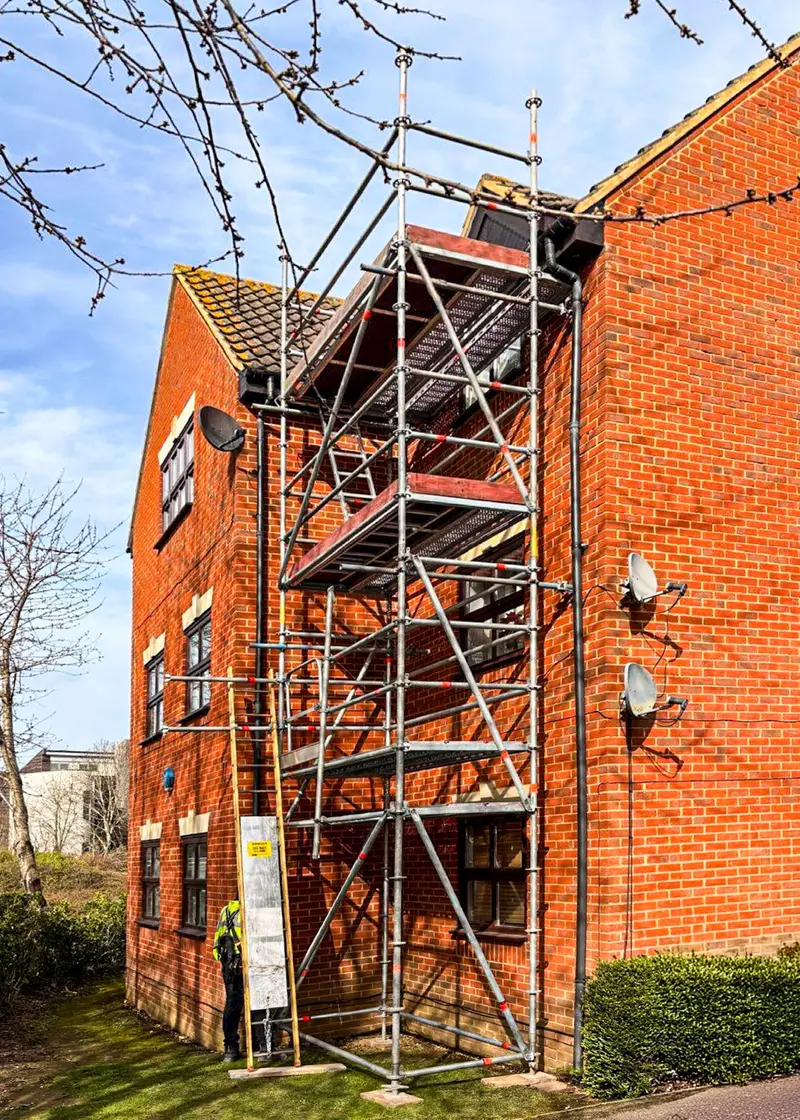
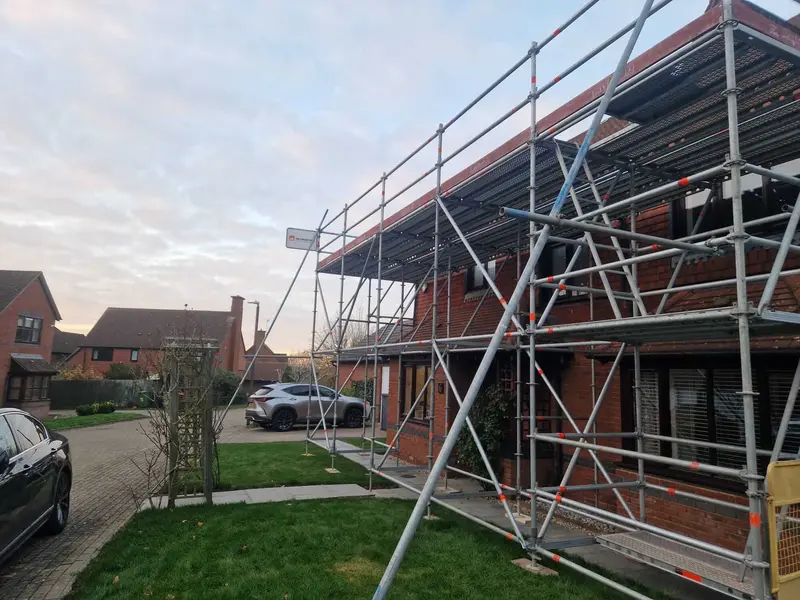
An extension isn’t quite a new build and isn’t quite a refurbishment. The scaffold has to handle the new structure being built from the ground up while also providing access to the existing structure where the two meet. That interface is where most of the finish work happens and where the scaffold design gets interesting.
Common details that drive scaffold design on extensions: the junction between new brickwork and existing render (needs working access on both sides of the joint), the tie between the new roof and the existing roof (needs access at the valley or abutment), and the rainwater goods transition from new to existing (needs access at the rainwater outlet position). We’ll walk through these details with you and the builder at survey.
Party walls and neighbour relations
Extensions commonly involve shared boundaries or party walls. The scaffold has to respect the boundary — we can’t cross onto a neighbour’s property without their explicit permission, and we can’t tie into a shared wall without the relevant party wall agreement. On jobs where neighbour coordination matters, we’ll encourage you to have the Party Wall Award in place before we mobilise, and we’ll design the scaffold to match the access granted by that award.
Honest programme estimates
Scaffold hire duration is often the variable that catches homeowners out on extension projects. Build programmes routinely slip — that’s true on any construction job — and the scaffold stays up until the external envelope is complete. If the plasterer is waiting on the plumber, or the roofer is waiting on weather, the scaffold keeps hiring. We’ll flag this at quote stage so the hire budget is realistic, not optimistic.
If you’ve got an upcoming extension, get in touch and we’ll walk the property with you and your builder.