Why the beam matters
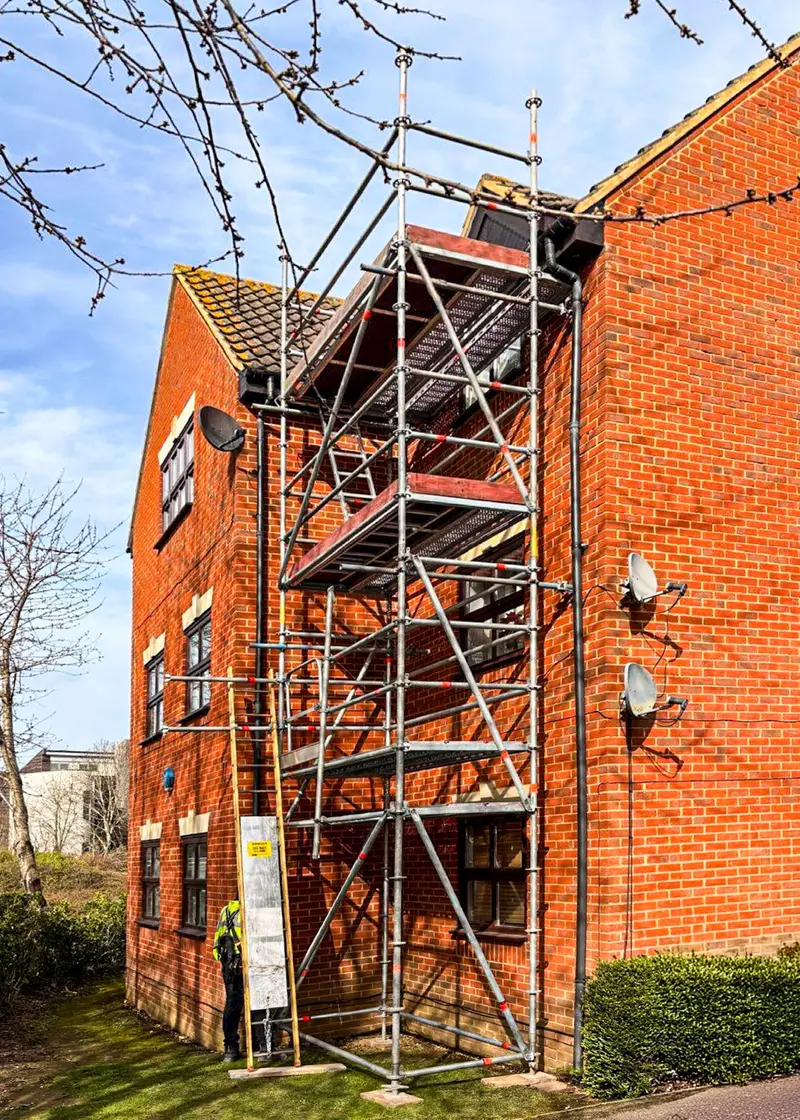
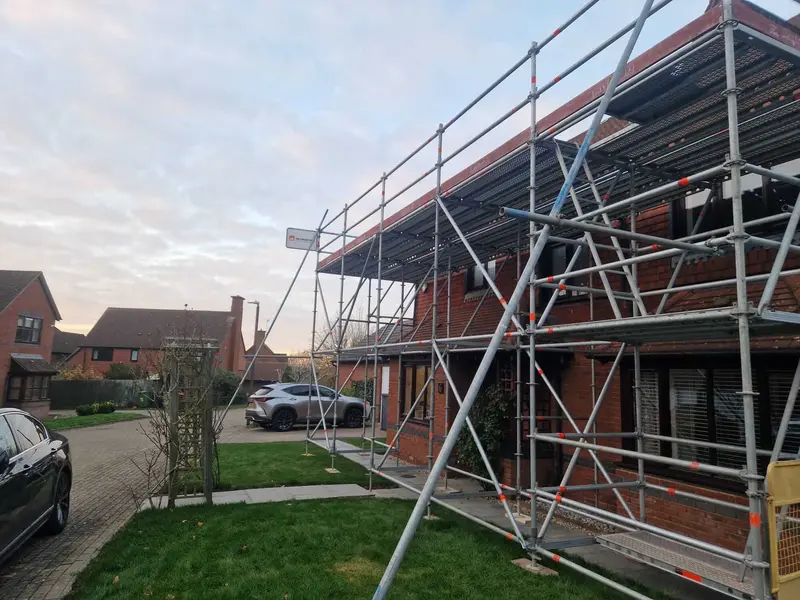
A bridging scaffold is genuinely different to a standard domestic scaffold. The load path is unusual — everything above the beam bears onto the beam, which bears onto two support points either side of the conservatory. The beam has to be stiff enough to not sag under the load, strong enough to not yield, and supported well enough that its ends don’t move. A DIY scaffold that “bridges” over a conservatory with some extra boards and hopeful ties is a conservatory breakage waiting to happen.
We use engineered steel beams designed for the specific span, checked against the loading of the scaffold above, and installed with proper crane or manual lifting support. The beam is the one component that won’t be a standard scaffold tube — and that’s the piece that makes the bridge safe.
Ground conditions on the supports
The other place bridging scaffolds fail is at the support points. A scaffold landing on soft ground, on a loose paving slab, or at the edge of a patio can settle unevenly, rotating the beam and putting additional load on the conservatory. We’ll assess ground conditions at both support points during survey, spread the load with sole boards or scaffold pads, and check that the supports are level and stable before we build above.
We’ll flag any concerns
If your conservatory looks too fragile to bridge safely, or the geometry of the site doesn’t give us two stable support points, we’ll say so. A bridging scaffold isn’t always the right answer. Sometimes the right call is to use a cherry picker or mobile access for the roof work, especially on short-duration jobs. We’d rather tell you that honestly than try to force a bridging solution that isn’t safe.
If you’ve got a rear-of-house job and a conservatory in the way, get in touch and we’ll survey the property.