Why you have to get roof edge right
Falls from height remain the single biggest cause of fatal workplace injuries in UK construction. The statistics have not moved meaningfully in thirty years, despite better regulation, better training and better equipment. What has moved is enforcement — HSE will investigate any roof work incident and any roof work done without proper edge protection is likely to end with an improvement or prohibition notice, even if nobody falls.
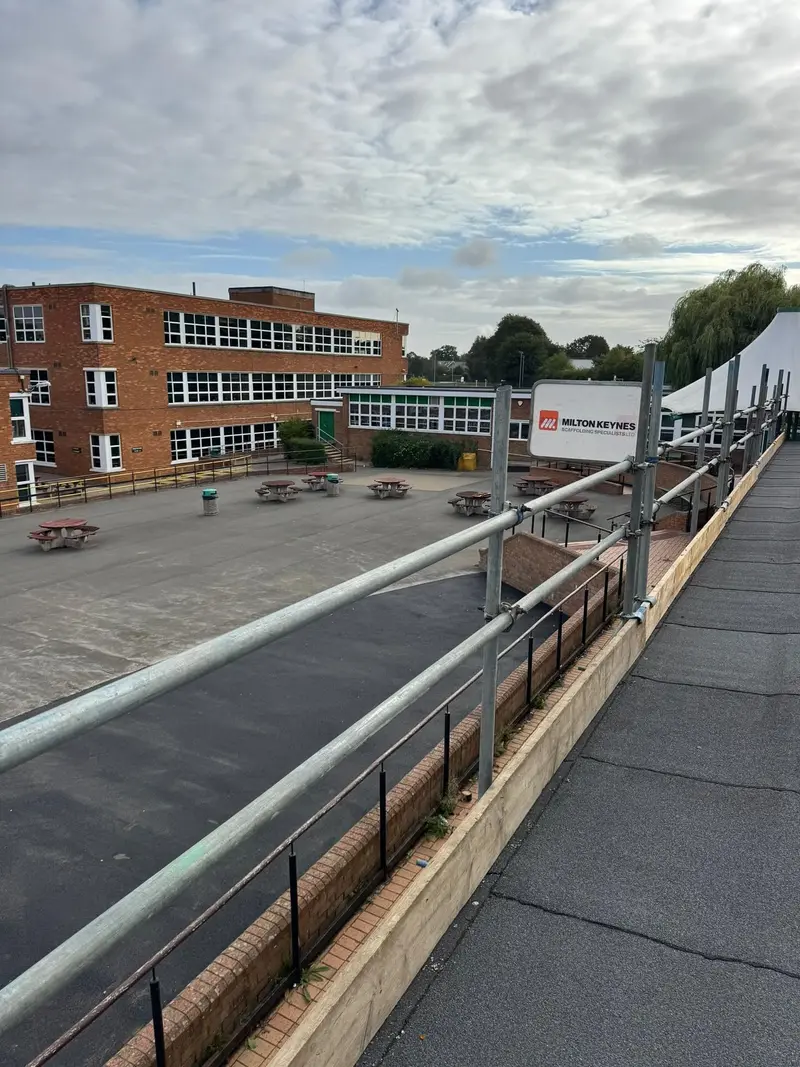
Temporary edge protection is not an optional extra. It’s the primary engineering control under the Work at Height Regulations and it has to be installed before any non-emergency access to a roof edge. The choice isn’t whether to install it — it’s what system and what provider.
Systems matched to the roof
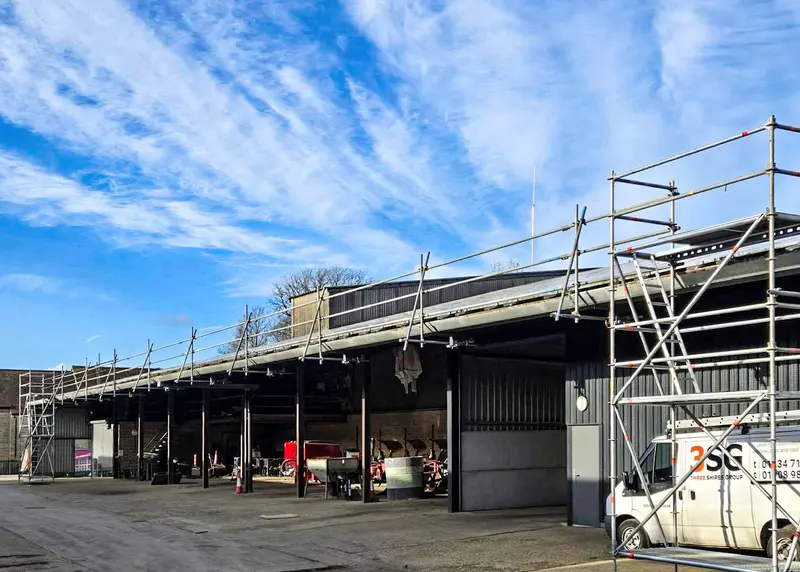
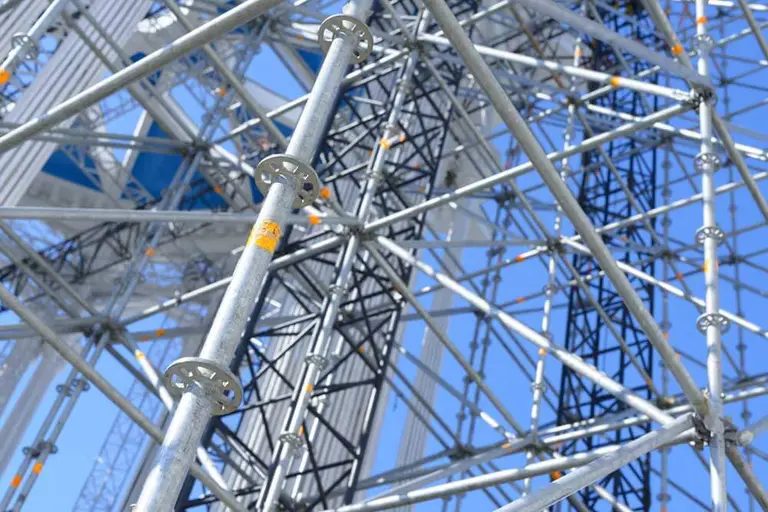
There is no single right answer to “what edge protection should I use.” It depends on the roof structure, the duration of the work, the type of work being done, and the available fixing points. Counterweight systems work well on flat roofs with good bearing capacity. Eaves-mounted scaffold-based systems work well on pitched roofs. Integrated scaffold systems are the right choice when there’s a main scaffold on site already. We’ll survey the roof and recommend the system that matches the job, not the system we happen to have in the yard.
Fast mobilisation for short jobs
Some of our most common edge protection jobs are short-duration works — a chimney inspection, an aerial swap, a gutter clearance, a solar survey. These jobs don’t justify a full scaffold package, but they can’t safely happen without edge protection either. We run a fast-mobilisation quoting process for these jobs: if you can give us a next-day turn on the site visit, we can usually be on site within the week.
If you’ve got an upcoming commercial roof job or short-duration maintenance work, get in touch and we’ll arrange a site survey.