Commercial Scaffolding

High Level Scaffold

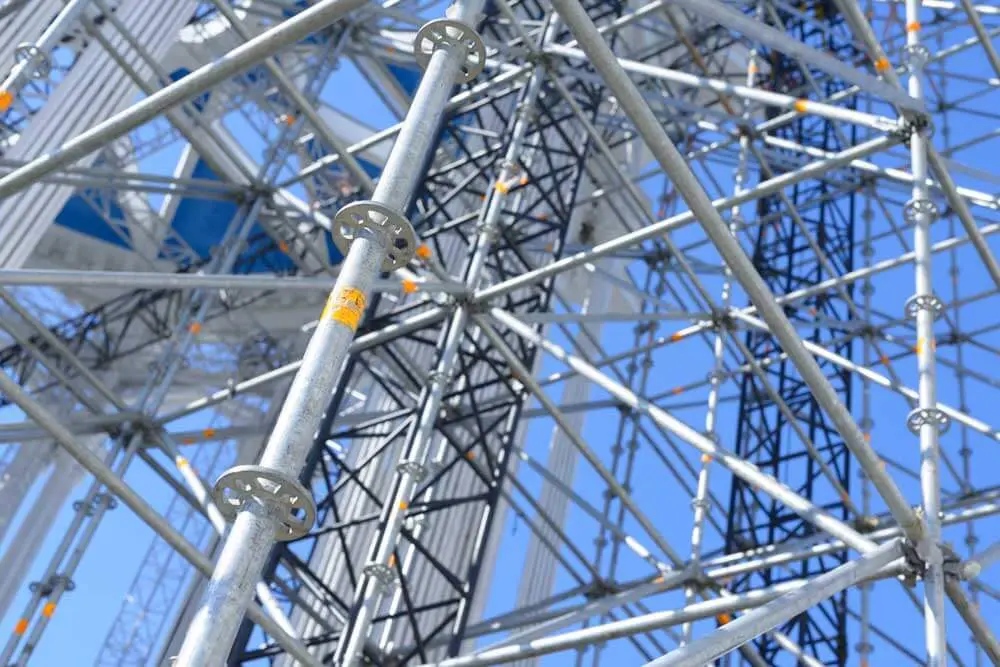
Engineered high level scaffolding for tall commercial buildings — designed for the wind load, tied into the structure, and built to take traffic and materials.

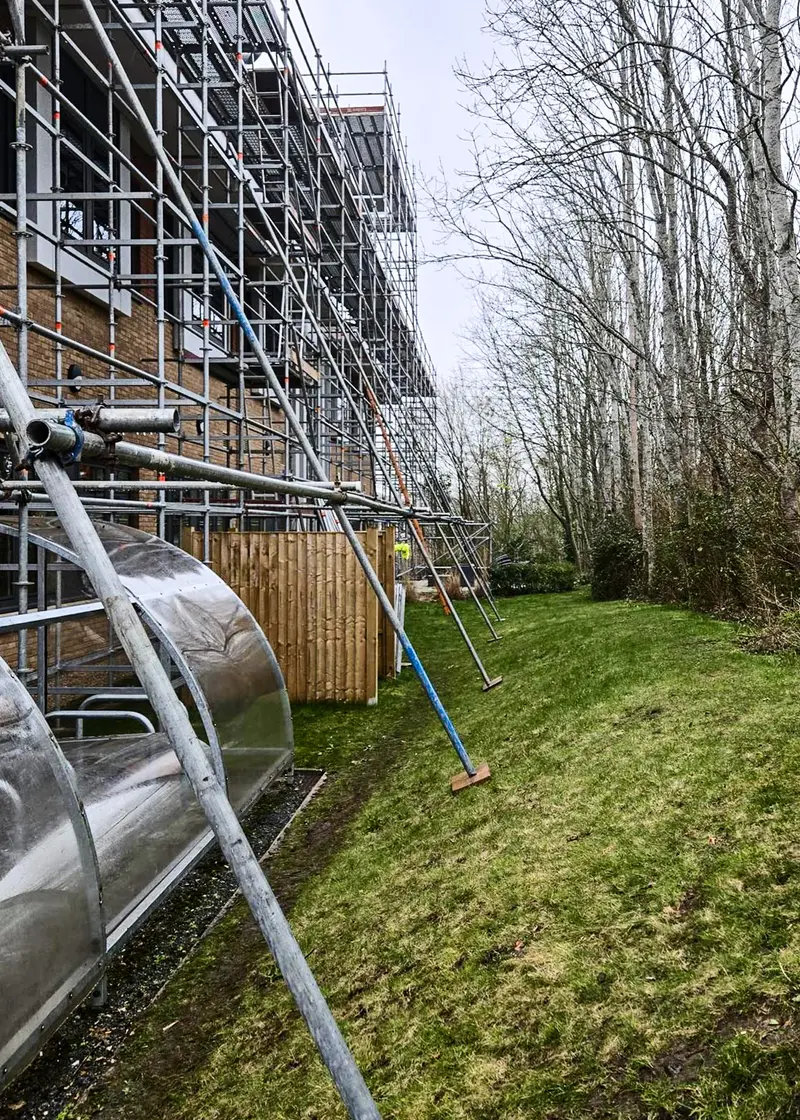
Full-height Layher scaffold wrapping a ten-storey commercial office building in Milton Keynes, with working decks visible at every level and ties to the façade

High Level Scaffold

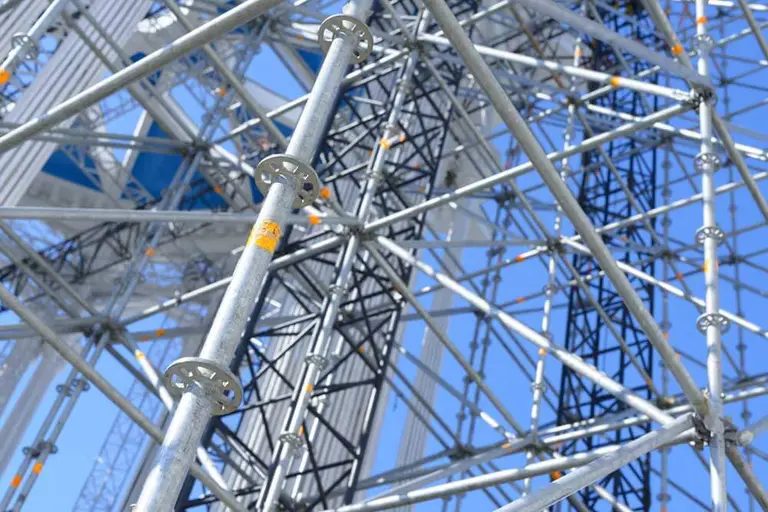
Close-up of a tall façade scaffold showing properly spaced ties, double-decked working platforms, and brick guards, with a cladding crew working on the top deck

Tall Access Works

NASC Member CISRS Qualified CHAS Accredited SafeContractor Approved CITB Registered Free Site Surveys

Skilled & Certified Scaffolders

High level scaffolding is where the rules change. Above about 20m the loading calculations get more serious, the tie pattern gets denser, and the wind loading starts to dominate the design. Any scaffold where a single gust can bring the structure down isn't one you want to economise on, and the penalty for getting it wrong is too large to accept. We design and install high level scaffolding on commercial buildings across Milton Keynes and the surrounding counties — from six-storey office refurbishments up to much taller projects.

Most of our high level work is Layher system for straight façades and tube-and-fitting where complex geometry needs it. Either way the scaffold is engineered to BS EN 12811 with a full design produced by our in-house designer, referenced to the site exposure category and the wind data for the location, and signed off before we mobilise.

What we handle:

  • Engineered design referenced to BS EN 12811
  • Wind loading calculated for the site exposure
  • Layher system packages for fast tall access
  • Tube-and-fitting for complex geometry
  • Double-decked platforms for material-heavy trades
  • Integrated material hoist and loading bay provision

When you need it

Typical scenarios where high level scaffold is the right call.

Commercial façade refurbishment

Full-height scaffolds for cladding, window replacement, rendering and façade repair on tall office, retail and mixed-use buildings.

Roof and parapet works

Roof edge scaffolds and parapet access on multi-storey commercial buildings, often with sheeting, edge protection and hoist integration.

New build tall structures

Perimeter scaffolding for new build commercial schemes — brickwork, cladding, roofing, and MEP first-fix.

The engineering has to come first

For a tall scaffold, nothing gets built until the design is signed off. That’s the opposite of a typical domestic scaffold where the design is essentially standard and mobilisation can happen as soon as the quote is accepted. On tall commercial work, our design team will visit the site, measure up, review the building’s façade condition for tie locations, check the wind exposure, and produce a design package that goes through internal review before it goes to site.

We’ll issue the design drawings and calculations to the client’s structural engineer for sign-off before we mobilise. That’s not a formality — on tall scaffolds we actively want a second set of eyes on the design, because a missed tie or an underestimated wind load is a failure mode we need to eliminate before we stand a single standard.

Programme matters

Tall scaffolds are slow to put up and slow to take down compared to low-level work. A ten-storey perimeter scaffold might take three to four weeks to erect at a normal resourcing level, and a week to two weeks to strip. We’ll programme the erection to match the cladding or refurbishment contractor’s mobilisation date, and we’ll build from the bottom up in sequence so the lower levels are handed over as the higher levels are still being built — that’s the fastest route to getting trades working on the scaffold.

Get in touch at design stage

If you’ve got an upcoming tall building refurbishment or new build project, get in touch at design stage rather than at tender stage. We can produce indicative scaffold drawings that feed into your programme and preliminaries costing, and we can flag any façade features that’ll drive scaffold cost up if they’re not accounted for.
Our Process

How It Works

Getting scaffolding in place shouldn't be complicated. Here's how our straightforward process works from first contact to completion.

01

Free Quote

Contact us by phone or via our online form. We'll discuss your project requirements and arrange a convenient time to visit.

02

Site Survey

One of our experienced estimators will visit your site, assess the access requirements, and provide a detailed, competitive quote.

03

Scaffold Erected

Our CISRS-qualified scaffolders will erect your scaffold safely and efficiently, with full compliance to NASC standards.

04

Sign-off & Removal

Once your project is complete, we'll carry out a full inspection, obtain sign-off, and dismantle the scaffold promptly.

Need high level scaffold in Milton Keynes?

Speak to our team for a free site visit and a clear, no-obligation quote.

Gold Standard Safety

We're proud NASC members

The NASC badge isn't self-certified — it's independently audited. As one of only a handful of NASC-certified scaffolding companies in the Milton Keynes area, it's a standard we work to every single day.

What NASC membership means for you

Frequently Asked Questions

At what height does a scaffold need engineered design?
Technically, any scaffold that falls outside TG20 compliant design needs its own engineered design — that threshold is often hit well before 20m on loaded or complex scaffolds. As a rule we engineer any scaffold above 15m, any that carries heavy loading, any that is sheeted, and any on a complex façade. Drawings and calculations are signed by a chartered engineer.
How does wind loading change at height?
Wind speeds increase with height, and the loading on the scaffold increases with the square of the wind speed. A scaffold at 25m will see significantly more wind pressure than the same scaffold at 10m. That drives tighter tie spacing, stronger tie connections, and sometimes additional bracing — and it's why we never eyeball the design on tall jobs.
Layher system or tube-and-fitting?
For straight façades where the geometry is regular, Layher is faster to erect and faster to strip. For buildings with setbacks, complex corners, cantilevers or unusual cladding profiles, tube-and-fitting is more flexible. On most large jobs we use a mix — Layher on the main runs, tube-and-fitting at the complex detailing.
Can the scaffold take cladding and glazing loads?
Yes, if designed for it. Working platforms for cladding installation need to carry the pallet weights of the cladding panels and often a materials hoist for delivery up the scaffold. We'll size the decks, the standards and the ties to the actual trades that will use the scaffold, not a generic spec.
Do you provide material hoists?
Yes. Tall scaffolds without a hoist are labour-inefficient for any trade moving materials up and waste down. We'll integrate a rack and pinion hoist or a scaffold-mounted hoist into the design, positioned for the primary material flow on the site.
Are you insured for tall scaffolding?
Yes. Full public and employer's liability insurance suitable for high level scaffolding, plus NASC membership, CHAS, CITB and SafeContractor accreditation. Our scaffolders hold CISRS cards appropriate to their level, with senior scaffolders on tall work holding Advanced Scaffolder qualifications.

Commercial Scaffolding

Other commercial scaffolding services

Explore the rest of our scaffolding solutions in this division.

Site Hoarding

Site hoarding designed, installed and maintained around commercial sites — safe, branded, and compliant with local authority standards.

Tree Protection Scaffolding

BS5837-compliant tree protection scaffolding — engineered to protect the root protection zone, the trunk and the canopy through construction.

Roof Edge Protection

Temporary roof edge protection — double guardrails, toeboards and netting — installed fast for roofing, MEP and maintenance work at height.

Bin Chutes

Rubbish chutes and debris chutes installed on scaffold — the fastest, safest way to get waste off a multi-storey project and into a skip.

Demolition Scaffolding

Scaffolding for controlled demolition — crash decks, perimeter protection and façade retention sets — engineered for the sequence and stripped to match the demolition.

New Build Scaffolding

Full-programme scaffolding for commercial new build — from brickwork through cladding, MEP first-fix and roofing — built to the groundworks programme and alterations planned for the trades.

Large Commercial Access

Large-scale scaffolding packages for major commercial projects — designed and resourced for long programmes, heavy loading, and multi-trade coordination.

Cladding Refurbishment Scaffolding

Scaffolding for cladding strip, insulation upgrade and recladding works — designed for the façade detail, loaded for the cladding panels, and programme-matched to the cladding contractor.

Site Staircases

Scaffold-mounted site staircases — fast, robust, DDA-compatible access for multi-storey construction sites. Layher StairCase system as standard.

Hoist Towers

Scaffold-integrated hoist towers — from small goods hoists to multi-tonne passenger-goods rack and pinion systems — designed around your site programme.

Scaffold Sheeting

Scaffold sheeting, debris netting and Monarflex encapsulation — weather protection, debris control and public protection tailored to the job.

Loading Bays

Heavy-duty scaffold loading bays — designed for pallet delivery, cladding panels and plant handling. Sized to your material flow and engineered to the load.

Get in touch for a quote

NASC certified · CISRS qualified · Fully insured · 25+ years experience across Milton Keynes and the surrounding area.