Domestic Scaffolding

Temporary Roofs

Temporary roof scaffolds — keeping the weather off while the real roof is off. For re-roofing, loft conversions and major structural work.

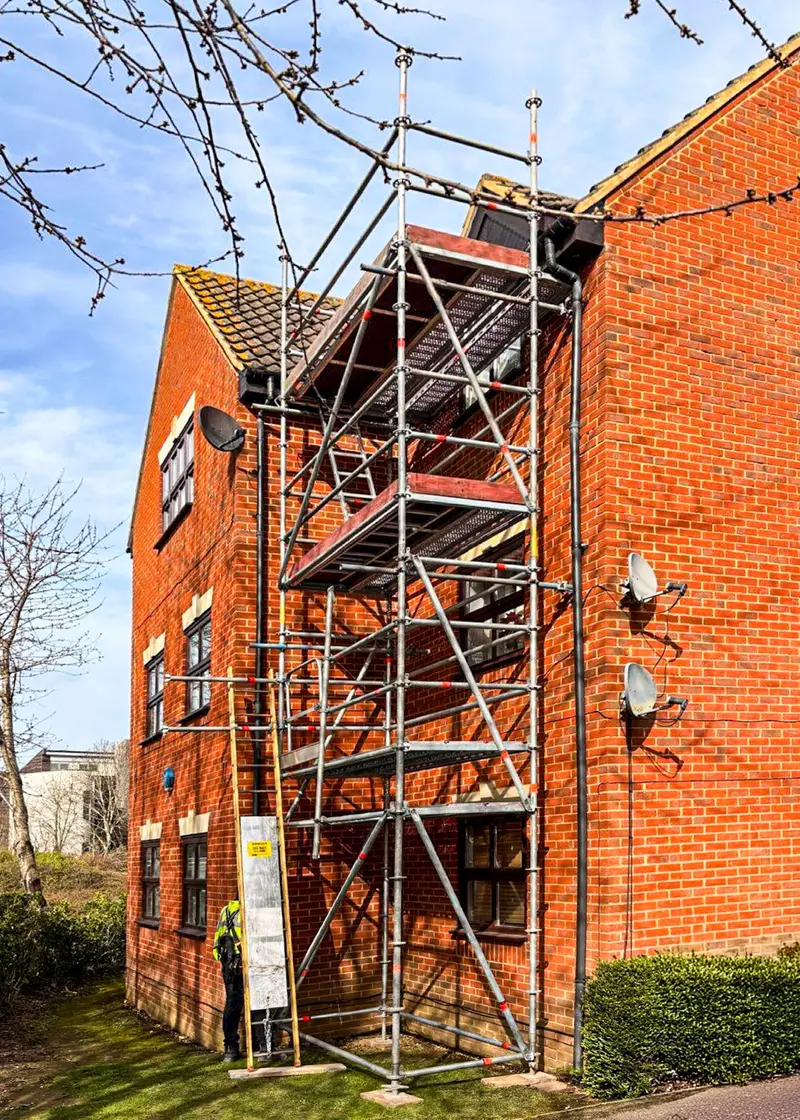
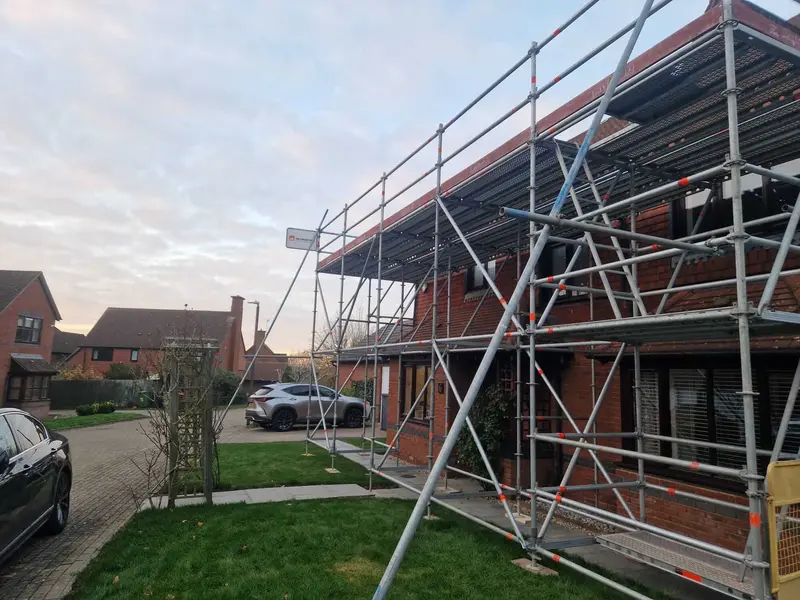
Full-span temporary roof scaffold covering a domestic house in Milton Keynes during a major re-roofing project, with sheeted cover keeping rain off the exposed loft

Temporary Roof

Detail of a temporary roof scaffold showing the corrugated sheeting covering, overlapping joints and properly detailed gable-end closure

Sheeted Weather Cover

NASC Member CISRS Qualified CHAS Accredited SafeContractor Approved CITB Registered Free Site Surveys

Skilled & Certified Scaffolders

A temporary roof is the answer when a real roof comes off but the rain keeps coming. Re-roofing projects, loft conversions with full roof rebuild, major structural alterations involving wall plate changes, and fire damage repair all need a period where the property is open to the weather — and most of them can't tolerate even a short shower on the exposed structure. We design and install temporary roof scaffolds across Milton Keynes and the surrounding region, keeping properties dry while the work happens below.

Our temporary roofs are scaffold-framed structures with lightweight rafters and either corrugated sheeting or Monarflex-style membrane covering. The roof spans the full building, sits well above the line of the working structure, and provides clearance for trades to work on the roof timbers and wall heads beneath. Each temporary roof is designed to the specific building, with wind loading and snow loading calculated to the site exposure.

What we handle:

  • Full-span scaffold-framed temporary roofs
  • Corrugated sheeting or membrane covering
  • Wind and snow loading calculated into design
  • Engineered ties to building structure
  • Working clearance below for structural trades
  • Weather protection for any re-roof duration

When you need it

Typical scenarios where temporary roofs is the right call.

Re-roofing projects

Full weather protection during roof tile, slate or metal roof replacement — allowing the stripped roof to be exposed for days or weeks without weather damage.

Loft conversions

Temporary roof cover during loft conversions with structural alterations — dormer installation, roof raise, full rebuild — where the existing roof comes off before the new one is complete.

Fire and storm damage repair

Emergency temporary roofing after fire, storm or other structural damage — fast mobilisation to keep the property weather-tight while the permanent repair is scoped and delivered.

Why temporary roofs exist

For most of the history of UK construction, re-roofing work happened in summer on dry weeks, and when a shower came the roofer tarped over the exposed area and called it a day. That still works on small jobs with short duration. It doesn’t work on anything bigger — loft conversions with three-week exposure windows, major structural alterations with four to six weeks of exposed structure, or re-roofs scheduled into winter months when dry weeks aren’t reliable.

A temporary roof turns the weather into a non-issue. The project runs to its programme regardless of rain, the exposed structure stays dry, the internal finishes aren’t damaged by water ingress, and the property stays habitable or at least dry enough to not sustain secondary damage. On any project where the roof is off for more than a few days, it’s worth specifying.

Sizing the cover

The temporary roof has to span the building’s full footprint plus a margin, at a height above the existing ridge, with support from the surrounding ground or existing walls. On a semi-detached or terrace we may need to support one end off the party wall scaffold; on a detached property we usually build independent support on both gable ends. Each design is a custom piece of work, and we’ll produce drawings showing the roof in elevation against the building.

Emergency response

We keep capacity in the yard for emergency temporary roofs. After a structural fire, a storm-damaged roof, or a major structural failure, a homeowner or insurer often needs emergency weather protection in 24-48 hours to prevent secondary damage. Call us and we’ll check what we can do — if we can get there, we usually can, and we work well with insurance loss adjusters on the paperwork.

If you’ve got an upcoming re-roof, loft conversion or emergency weather situation, get in touch.
Our Process

How It Works

Getting scaffolding in place shouldn't be complicated. Here's how our straightforward process works from first contact to completion.

01

Free Quote

Contact us by phone or via our online form. We'll discuss your project requirements and arrange a convenient time to visit.

02

Site Survey

One of our experienced estimators will visit your site, assess the access requirements, and provide a detailed, competitive quote.

03

Scaffold Erected

Our CISRS-qualified scaffolders will erect your scaffold safely and efficiently, with full compliance to NASC standards.

04

Sign-off & Removal

Once your project is complete, we'll carry out a full inspection, obtain sign-off, and dismantle the scaffold promptly.

Need temporary roofs in Milton Keynes?

Speak to our team for a free site visit and a clear, no-obligation quote.

Gold Standard Safety

We're proud NASC members

The NASC badge isn't self-certified — it's independently audited. As one of only a handful of NASC-certified scaffolding companies in the Milton Keynes area, it's a standard we work to every single day.

What NASC membership means for you

Frequently Asked Questions

How quickly can you install a temporary roof?
A typical domestic temporary roof takes two to four days to install depending on size and complexity, and we can usually mobilise within a week of order. For emergency work after fire or storm damage we can often mobilise within 48 hours and get the roof up inside the same week. Call us and we'll check capacity.
How high above the property does the roof sit?
Typically 500mm to 1m clearance above the existing ridge line, giving working clearance for the trades below and preventing the temporary rafters interfering with any structural work on the real roof. Clearance can be adjusted based on the work — some dormer rebuilds need more, some simple re-slates less.
What about wind and snow loading?
A temporary roof catches more wind than an open scaffold and, in winter, can carry snow. Every design calculates both, referenced to the site exposure and the local climate. In very exposed positions we may design the roof in panelised sections that can be partly opened in forecast high winds.
Can the trades work underneath?
Yes — that's the point. The temporary roof gives the trades a dry, sheltered environment to work on the structural rafters, wall plates and stripped roof deck. Most re-roofing and loft conversion work happens faster and better under temporary cover than it does under direct weather.
How long can a temporary roof stay up?
As long as needed. Most domestic projects need three to eight weeks of cover. Longer-duration projects — major extensions, full house refurbishments — can run the temporary roof for six months or more. The hire is charged on a weekly or monthly basis after the initial period.
Can you remove it in sections as the new roof goes on?
Yes. Phased strip is common on longer re-roofing jobs — the new roof is completed in zones and the temporary cover is stripped zone by zone once each zone is dried in. We'll coordinate the strip with the roofer's programme at pre-start.

Get in touch for a quote

NASC certified · CISRS qualified · Fully insured · 25+ years experience across Milton Keynes and the surrounding area.