Domestic Scaffolding

Rendering Access Scaffolding

Scaffolding for rendering trades — working platforms spaced for silicone, K-Rend, monocouche and EWI applications. Stable, wide and renderer-friendly.

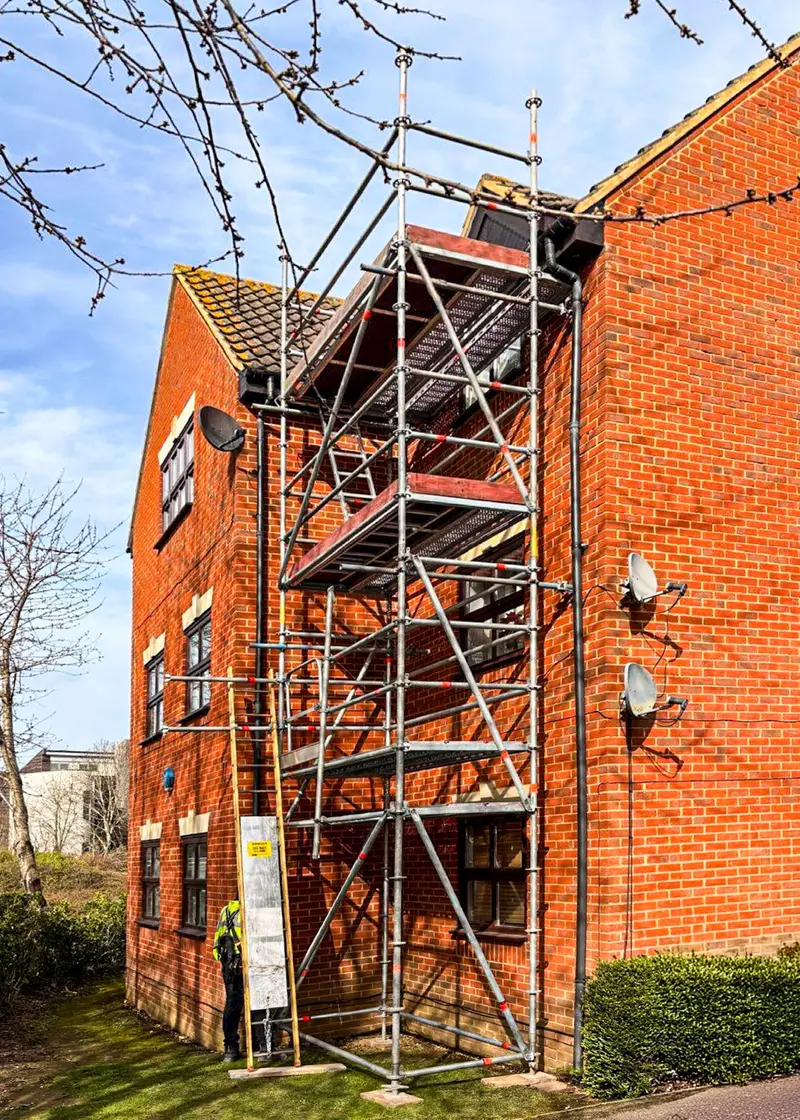
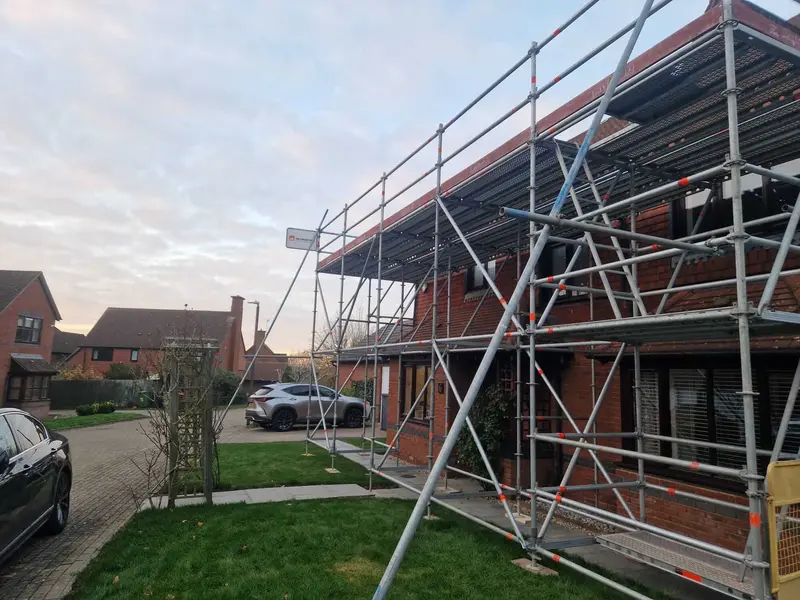
Wide scaffold with double-decked working platforms around a domestic property during a full silicone render application in Milton Keynes

Rendering Access

Detail of a rendering scaffold showing the generous working deck width and the smooth tie pattern planned around the render coat

Render Scaffold

NASC Member CISRS Qualified CHAS Accredited SafeContractor Approved CITB Registered Free Site Surveys

Skilled & Certified Scaffolders

Rendering scaffolds are designed differently to other domestic scaffolds. The renderer needs a wide, stable working platform, tie positions that won't leave marks in the finished coat, and alterations that work with the rendering programme — priming, scratch coat, finish coat, and cure time between stages. We supply rendering access scaffolding across Milton Keynes and the surrounding counties for rendering contractors working on silicone, K-Rend, monocouche, EWI and traditional render systems.

Most of our rendering scaffolds run for three to eight weeks, with the render going on in phases across the programme. The scaffold is usually unsheeted unless the weather demands otherwise; good silicone render systems actually work better without sheeting because they need air circulation to cure properly. Where winter work pushes into poor weather, we'll sheet selectively and add dehumidification support.

What we handle:

  • Wider-than-standard working decks
  • Tie positions planned to minimise render scars
  • Loading bay sized for render material delivery
  • Alterations through primer, scratch and finish coat stages
  • Sheeting option for winter-season render work
  • EWI-friendly tie detailing with thermal breaks

When you need it

Typical scenarios where rendering access scaffolding is the right call.

Silicone and modern render systems

Access for silicone, silicate and polymer-modified render systems — K-Rend, Sto, Weber, Parex. Wider platforms for clean application and tie detailing to match.

Monocouche and traditional render

Working platforms for one-coat monocouche render systems, plus traditional sand-and-cement render. Phased alterations to match the cure programme.

External wall insulation (EWI)

EWI-specific scaffolds with thermal-break tie details, deeper standoff for insulation thickness, and loading bays sized for insulation board delivery.

Why render scaffolds are different

A scaffold for rendering isn’t just a scaffold that happens to be next to a rendered wall. It’s a scaffold designed for a trade that works with wet material, needs a wide platform to apply it, and cares about what the scaffold leaves behind on the finished wall. Our render scaffolds are tuned for this: wider decks, carefully planned tie positions, and coordination with the renderer’s programme from day one.

The main failure mode on a cheap render scaffold is the tie pattern. Too close, too visible, or badly placed, and you end up with tie marks showing through a £15,000 render job. That’s a no-win for everyone. Getting the tie pattern right takes maybe an extra hour at design stage, and it pays back every day of the render programme.

Sequencing with the renderer

Rendering is cure-sensitive work — the primer has to cure before the scratch coat, the scratch coat has to cure before the finish coat, and the finish coat has to cure before the scaffold strips. Rushing any stage causes cracking, adhesion failure, or staining. We plan alterations in harmony with the renderer’s programme rather than to our own schedule, which sometimes means the scaffold is up for a week longer than it would be on a brickwork-only job. That’s priced into the quote.

EWI is its own thing

External wall insulation has grown significantly over the last few years as homeowners look for energy efficiency upgrades and net zero compliance. The scaffold for EWI is different again — the tie detail has to pass through the insulation cleanly, the working platform has to stand clear of the insulation thickness, and the loading bay has to fit insulation boards. We treat EWI as a specific sub-category of render work with its own spec.

If you’ve got an upcoming rendering or EWI project, get in touch and we’ll spec the scaffold to the work.

Our Process

How It Works

Getting scaffolding in place shouldn't be complicated. Here's how our straightforward process works from first contact to completion.

01

Free Quote

Contact us by phone or via our online form. We'll discuss your project requirements and arrange a convenient time to visit.

02

Site Survey

One of our experienced estimators will visit your site, assess the access requirements, and provide a detailed, competitive quote.

03

Scaffold Erected

Our CISRS-qualified scaffolders will erect your scaffold safely and efficiently, with full compliance to NASC standards.

04

Sign-off & Removal

Once your project is complete, we'll carry out a full inspection, obtain sign-off, and dismantle the scaffold promptly.

Need rendering access scaffolding in Milton Keynes?

Speak to our team for a free site visit and a clear, no-obligation quote.

Gold Standard Safety

We're proud NASC members

The NASC badge isn't self-certified — it's independently audited. As one of only a handful of NASC-certified scaffolding companies in the Milton Keynes area, it's a standard we work to every single day.

What NASC membership means for you

Frequently Asked Questions

How wide should a render scaffold deck be?
Wider than a bricklayer's deck — normally 1.2m compared to 0.9m on a standard scaffold. The extra width lets the renderer work with a hawk and trowel without hitting the guardrail, and gives room for the render mixer hose and material buckets on the same deck. That's priced into our standard render quotes.
Won't the ties leave marks in the render?
They can if the tie pattern isn't planned carefully. We'll design the tie positions to fall in mortar joints or below the finished render line where possible, and we'll brief the renderer on tie positions so they can detail around them. Where a tie has to come through the render, we'll use a through-tie with removable inner sleeve so the renderer can neatly cap the hole after strip.
What about EWI ties?
EWI adds insulation thickness between the substrate wall and the render coat. The scaffold ties have to go through the insulation without creating thermal bridges. We use sleeved ties with insulation plugs that can be filled after strip, and we coordinate with the EWI installer on the exact tie detail.
Can the scaffold be sheeted for winter work?
Yes, though we'd often advise against it. Modern silicone renders prefer air circulation during cure, and a fully sheeted scaffold traps moisture against the render. For winter work we'll usually sheet only the windward faces, leaving the leeward faces open for air flow, and we'll coordinate with the renderer on the timing.
How do alterations work on a render programme?
Render typically goes on in three phases: primer and scratch coat, intermediate cure, and finish coat. The scaffold alterations follow the programme — usually a strip to lower the working platform between coats, and a final strip after finish cure. We'll plan the alteration schedule with the renderer at pre-start.
Do you provide material loading bays?
Yes. Render is delivered on pallets — bags of render, tubs of finish coat, insulation boards for EWI. A standard bay sized for 1m pallet delivery is usually sufficient. For larger projects we'll fit multiple bays to avoid horizontal wheelbarrow runs.

Get in touch for a quote

NASC certified · CISRS qualified · Fully insured · 25+ years experience across Milton Keynes and the surrounding area.